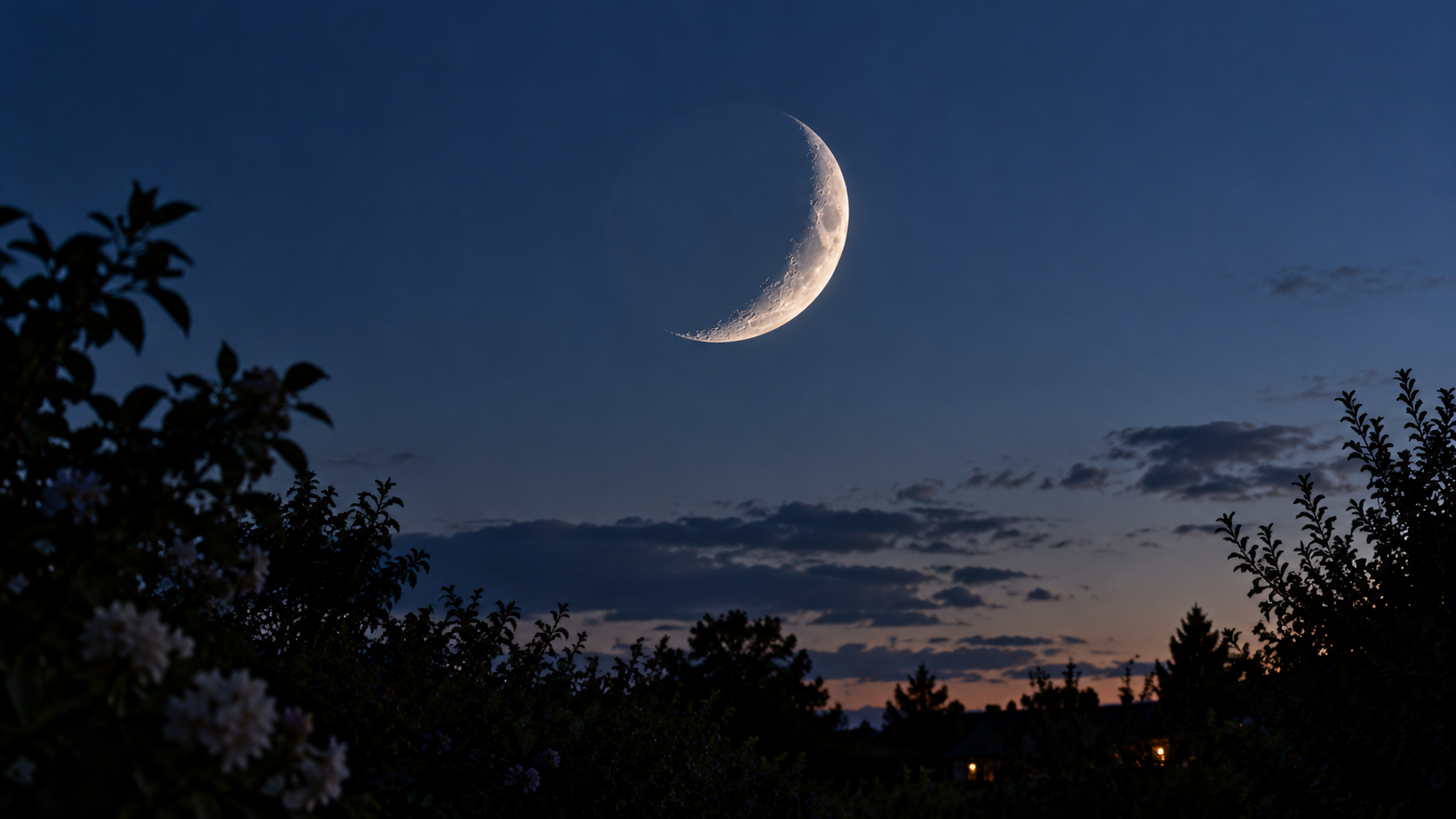
The Moon was visible above the neighbor's roof, and I almost walked past it. I was carrying a bag, thinking about dinner and behaving as though a bright world suspended above the garden were merely another familiar street fixture.
Astronomy has a way of encouraging the search for difficult things. That can be wonderful. It can also persuade a beginner that an easy object is an object already completed. Seen the Moon. Move along. Find something whose name sounds more impressive in a notebook.
I sat down instead. The familiar object had rather a lot left to say.
Look where the light changes
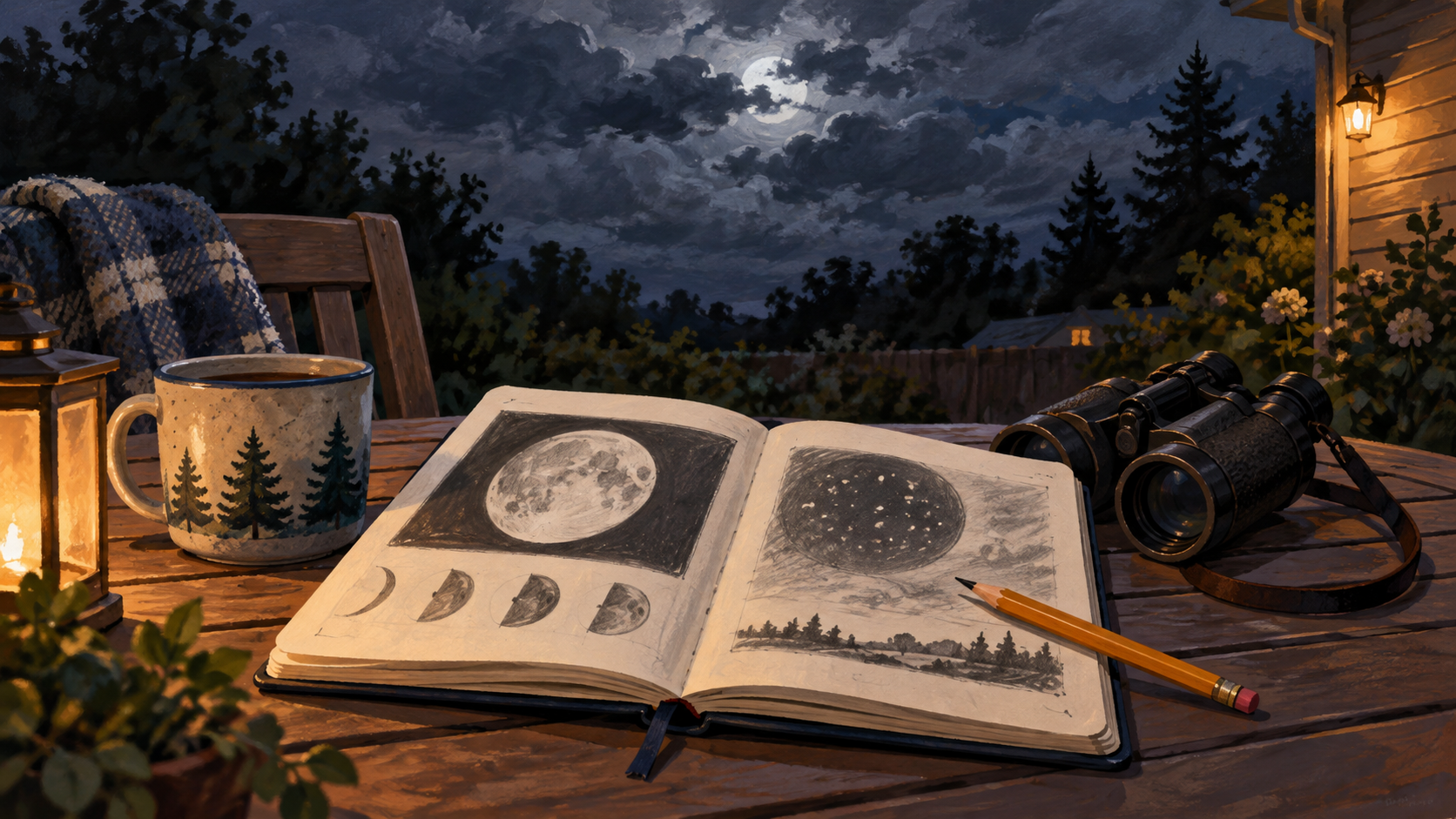
My first lunar sketches were circles with a few hurried marks. They recorded that I had looked up, but not much about what I noticed. Then I began paying attention to the boundary between the illuminated and dark portions, commonly called the terminator.
The useful explanation is straightforward: near that boundary, low-angle sunlight casts shadows that help surface features stand out. NASA's Moon viewing guide recommends giving this region particular attention when observing craters and other terrain. That is a scientific explanation behind a visual effect I can look for, rather than a grand claim based only on my impression.
I now choose one small area rather than trying to inventory the whole disk. What looks like a dark hollow? Where is a bright edge? Which feature remains uncertain? I make a rough drawing and write the conditions alongside it. The result is usually less elegant than the image in my imagination and much more useful at the next visit.
Binoculars can make a familiar view feel newly detailed, but I do not turn the note into an equipment contest. The Moon can be observed with unaided eyes too. I begin with what I can see, then ask whether an optical aid helps the particular observation I want to make.
Return before declaring it finished
A later visit changes the arrangement of light. The surface has not become a different world, but what is visible and how features appear can change. That makes repetition an unusually rewarding habit. I can compare observations without needing a new destination or a rare event.
I do not expect every night to supply an excellent view. Clouds, local obstructions and the practical realities of a household intervene. The notebook makes those limitations visible. A disappointing sketch might describe difficult conditions rather than a failure to pay attention.
I also distinguish what I observed from what I identified later. If a shape caught my eye and I found a possible name in a guide afterward, I say that. The distinction keeps the notebook honest and stops confidence from filling gaps that the actual view left open.
The most pleasant part has been allowing a short session to count. Ten patient minutes with one familiar object can leave me with a clear question for another evening. I do not need to exhaust a catalogue to justify sitting outside.
On the night above the neighbor's roof, dinner waited a little while. I drew a bright rim, shaded a hollow and wrote that I should revisit the same area under different light. The Moon had escaped being filed under already seen.
There are difficult wonders in the sky. There is also the one I keep forgetting to give a proper look while carrying the groceries inside.
A thought worth keeping?